Trends of AI 2026 – Our Decoding of the Customer Relations Insights
Trends of AI: The Reference Study on how AI is impacting business
Two years after its launch, Trends of AI is gaining momentum and has established itself as a key benchmark for AI in business. The 2026 edition decodes AI’s impact across 8 critical business verticals. It draws on feedback from over 350 decision-makers across 20 sectors and companies of all sizes, and benefits from the expertise of a dedicated committee for each vertical, ensuring operational, data-driven, and actionable insights.
For this edition, Odity comes on board as astrategic partner for the newly launched Customer Relation vertical.
Our Deputy CEO, Laure Perréard, joined the expert committee and teamed up with Les EnthousIAstes and KPMG France to co-create the questionnaire released last November.
As expected, Customer Relations ranks among the business areas most advanced in AI adoption, alongside Marketing and IT. Teams in this vertical are navigating high demand, intense operational pressure, and ever-growing customer expectations.
Conversational AI handles repetitive tasks, particularly in customer support.
33% of organizations have automated ticket sorting and routing.
30% use AI for assisted writing and processing customer feedback.
25% have deployed 24/7 agents or voicebots.
💡 Key takeaway: AI boosts efficiency while ensuring a personalized customer experience.
📊 ROI and Performance Drive Decision-Making
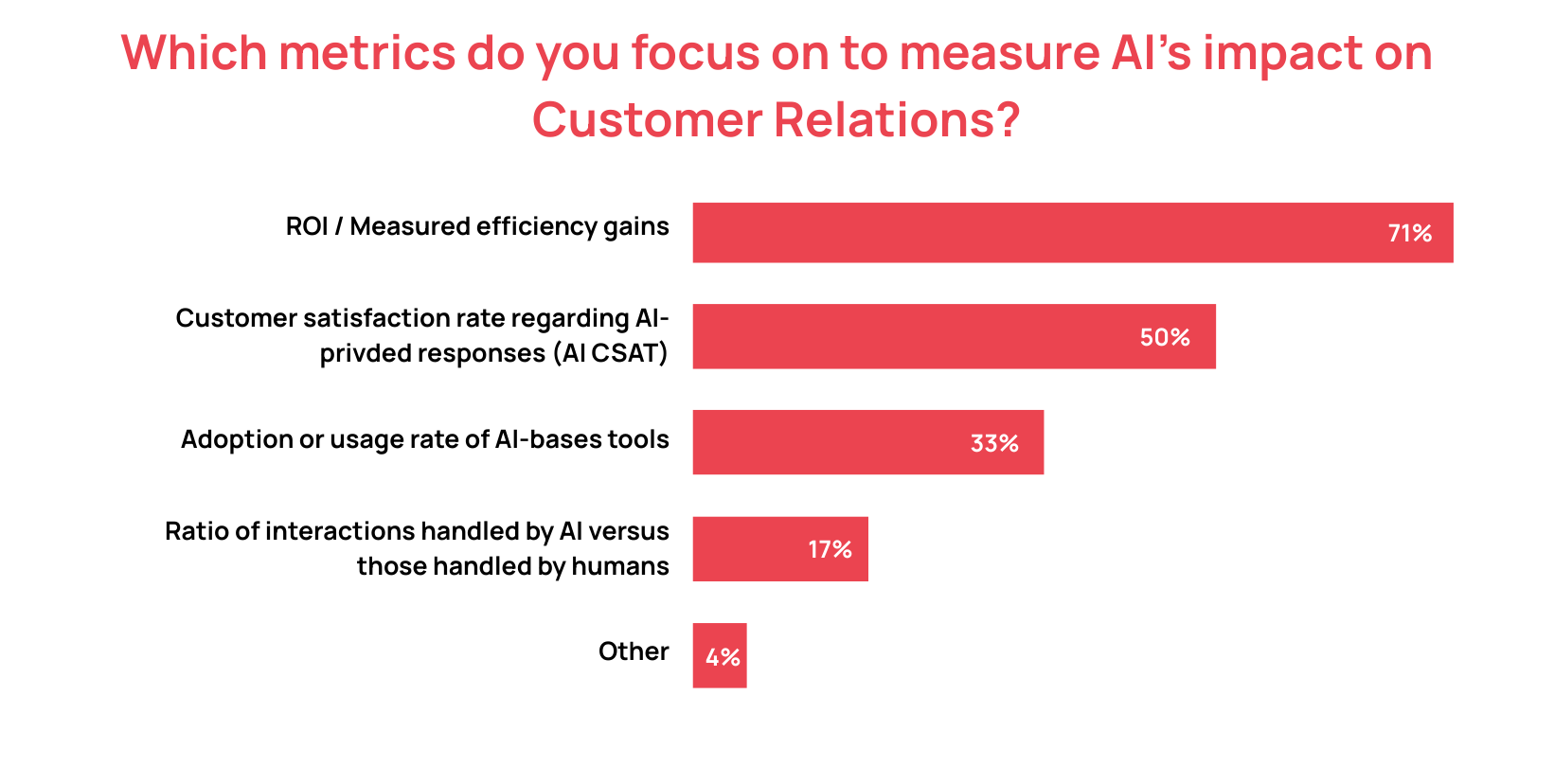
AI adoption is driven by results, ROI, and operational performance in customer service.
Management remains largely focused on internal performance and the optimization of business processes
💡 Key takeaway: AI isn’t just about efficiency: it also enhances the value of customer relationships.
🔧 Limited adoption at scale
While many are experimenting, only a few are scaling AI solutions in Customer Relationship.
30% of organizations are in the testing or POC phase.
10% have a clear roadmap for full-scale deployment.
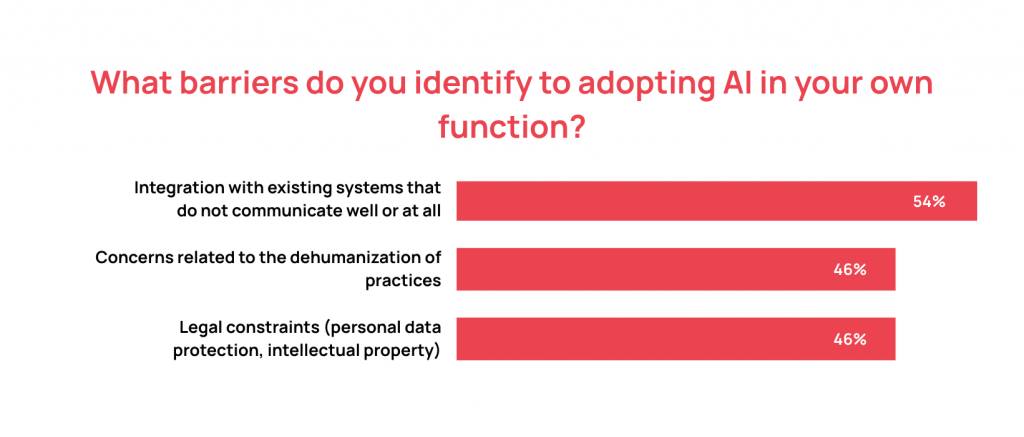
💡 Key takeaway: Scaling requires stable technology as well as transformation of skills and organizational structures. Democratizing AI in business remains a key challenge.
🤝 People remain at the center
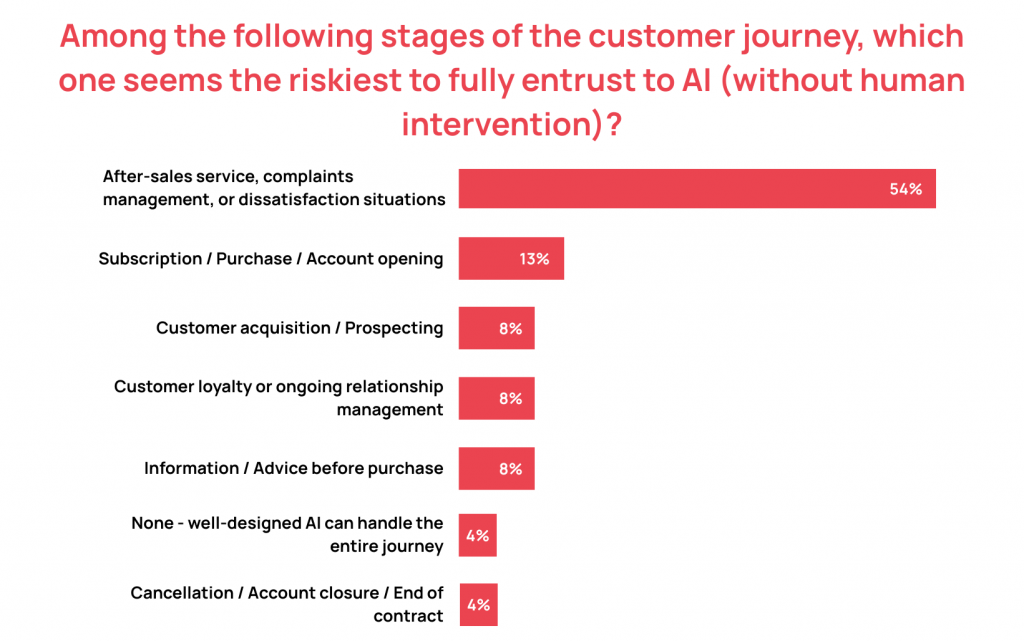
AI supports but doesn’t replace customer advisors. While fast and consistent, it isn’t suited for sensitive or emotional interactions.
These findings show that delivering an enhanced customer experience depends not on full automation, but on a seamless collaboration between humans and technology.
💡 Key takeaway: The key to AI-enhanced customer experience is balancing technology with human touch. In luxury and premium markets, AI makes service seamless, yet humans play the critical role in fostering trust, emotion, and brand identity, building a truly premium customer relationship.
Odity, by Benoît Vorilhon: AI Empowering a Human and Premium Customer Experience
The Trends of AI 2026 study highlights an obvious truth: AI can accelerate interactions and ease workflows, but building a genuine connection with customers requires the human touch. Something Benoît Vorilhon, Founder & CEO of Odity, emphasizes in his column.
When a brand entrusts its customer relationship, it is not just delegating a service. It is entrusting its most valuable asset: the way it connects with its customers.
Customer Relationship is a true strategic brand asset. In the luxury sector, every interaction conveys the brand’s culture, tone, and standards. Pure automation risks erasing the emotional value of the customer experience.
According to the Trends of AI 2026 study, conversational AI and automation are crucial for handling demand efficiently, but humans still lead the most valuable interactions.
Benoît Vorilhon’s column outlines a model for AI-augmented customer service, built on three pillars:
Analyzing and contextualizing data to gain deeper insights into every interaction.
Automating repetitive tasks to give humans more time for meaningful work.
Empowering Brand Ambassadors on listening and embodying the brand, where the relationship truly matters.
This forms the foundation of Odity’s Human & AI hybrid model. This hybrid approach enables the creation of a sustainable and differentiated customer relationship.
Teams are trained through immersion in brand universes, ensuring consistency, tone, and posture across all omnichannel customer touchpoints. Technology provides contextualized customer data in real time, enabling teams to anticipate needs and create premium experiences.
Our Analysis in 5 Key Points
The Trends of AI 2026 study aims to analyze AI adoption in customer relationship management and other business verticals (Marketing, IT, HR, Supply Chain, etc.) looking toward 2026. It provides insights into how companies are using AI to automate tasks, optimize performance, and enhance the customer experience, while preserving the human dimension of the relationship.
Odity is a sponsor and contributor to the study, bringing its expertise in luxury and premium Customer Relationship. The company provides operational and strategic insights, particularly on AI in luxury customer relations, based on its work with over 130 iconic brands, and helps contextualize observed trends for customer relationship management.
AI is reshaping Customer Relationship by automating routine tasks, improving request sorting, assisting with writing, and processing customer feedback, while boosting operational efficiency. It provides real-time insights, detects subtle signals, and informs decision-making. Yet, humans remain critical in high-emotion situations, like after-sales support and complaint management.
For luxury and premium brands, AI should be used to support relationships, not replace them. The main challenge is to preserve brand uniqueness and the quality of the customer experience while improving efficiency. Large-scale personalization, an enhanced customer experience, and seamless journeys are essential—but they must remain consistent with the brand’s identity and values.
The study targets all business verticals where AI has a direct impact. The Customer Relationship vertical is aimed at executives, heads of Customer Relationship, CX, CRM, and relational marketing, as well as any organization seeking to understand AI’s impact on Customer Relationship and identify actionable levers to enhance the customer experience while maintaining a human and strategic approach.
At Odity Pulse New York, Luxury & Retail Leading Expert Marie Driscoll delivered…
You are currently viewing a placeholder content from Facebook. To access the actual content, click the button below. Please note that doing so will share data with third-party providers.
You are currently viewing a placeholder content from Instagram. To access the actual content, click the button below. Please note that doing so will share data with third-party providers.